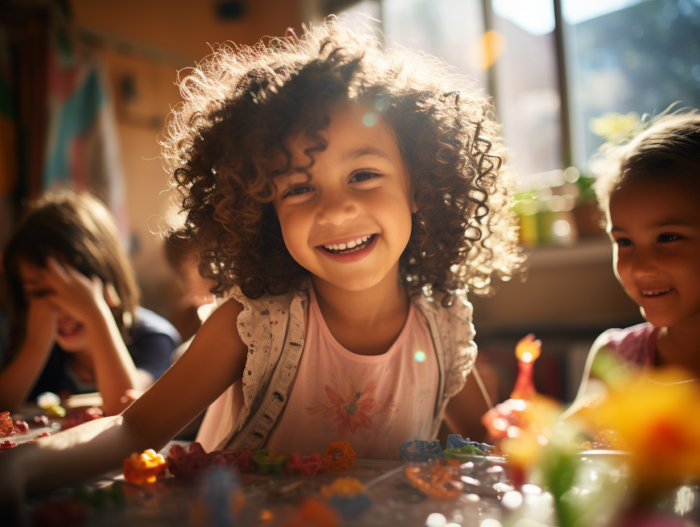
From the very first months of life, play occupies a fundamental place in a child’s development. Indeed, through play, young explorers learn to interact with their environment, develop their motor skills, language, and problem-solving abilities. Role-playing games, for example, allow them to understand and imitate social behaviors, while construction games promote hand-eye coordination and spatial thinking. The richness of playful experiences stimulates creativity and emotional intelligence, valuable assets for the child’s personal growth and future social integration.
The dimensions of child development through play
The play, associated with pleasure and repetition, is an undeniable vector of learning in the young child. This activity, far from being trivial, proves to be an essential driver in the overall evolution of the individual. Consider intellectual development: play supports logical thinking, problem-solving, and reasoning abilities. From logic games to puzzles, the child learns to analyze situations, devise strategies, and anticipate the consequences of their actions, thereby sharpening their critical thinking and reflection.
In the realm of social development, play serves as a privileged tool for integration and learning the norms of community life. Through role-playing and cooperative games, the child explores various social interactions, learns to negotiate, share, respect rules, and develop empathy. At the heart of this exploration is Diboo, a playful concept that embodies the spirit of mutual aid and friendliness, enhancing the child’s ability to forge connections and integrate harmoniously into the social fabric.
Let’s address motor and sensory development: it is through play that the child refines their fine motor skills and coordination. Whether it’s catching a ball or assembling game pieces, repeated movements contribute to improving dexterity and sensory perception. Assembly games, for example, require patience and precision, and contribute to spatial understanding and confident manipulation of objects.
The development of language is closely linked to playful activities. Play stimulates verbal exchange, enriches vocabulary, and strengthens sentence structure. Through nursery rhymes, guessing games, or imaginary dialogues, the child appropriates the subtleties of language, thus acquiring a better capacity for expression and comprehension. Play then becomes a stage where the first acts of communication unfold, essential for the child’s linguistic development.
The games and their evolving role in supporting the child
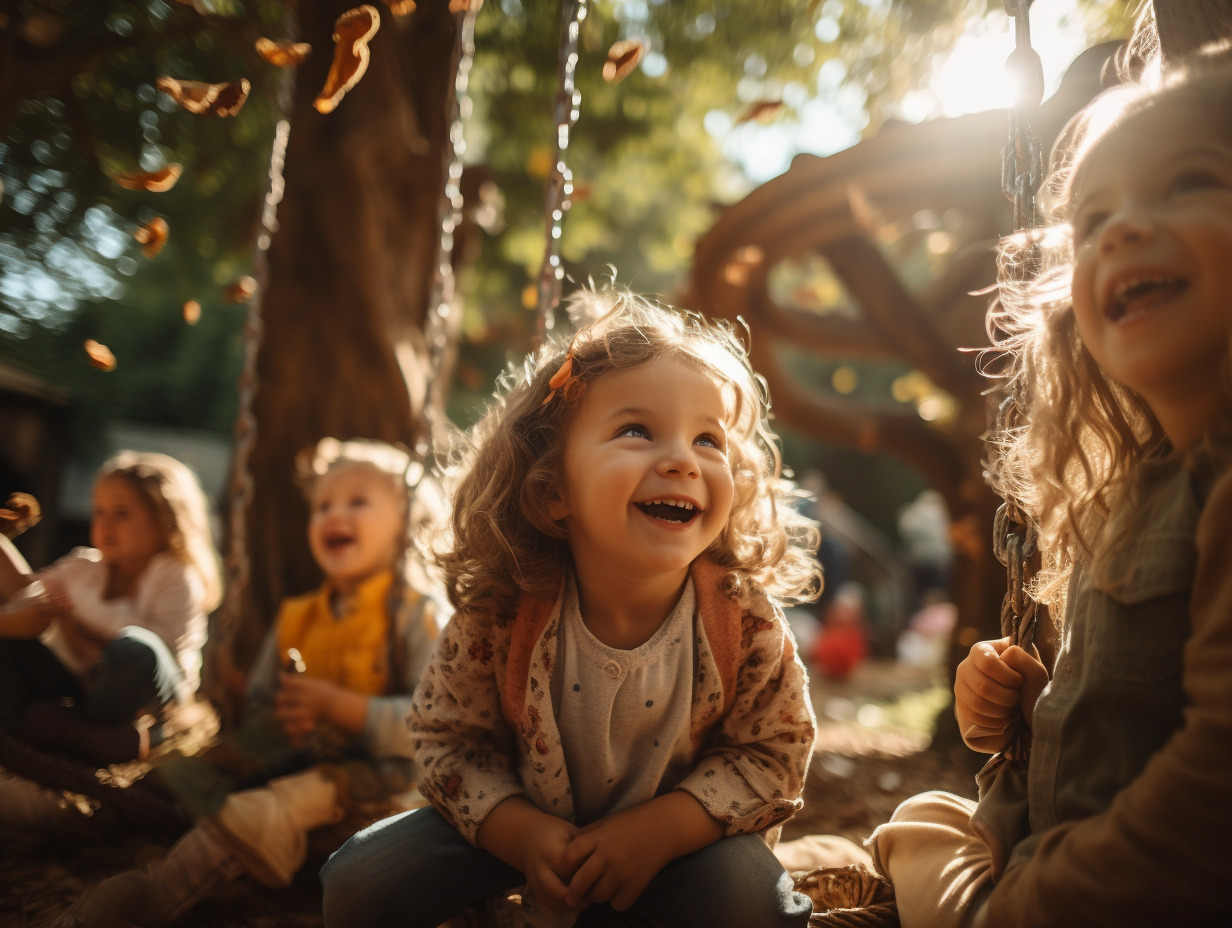
The theory of Piaget on the evolution of play sheds light on how different categories of games support child development. Exercise games, for example, are fundamental in the early years of life. They stimulate motor coordination, sensory discovery, and cognitive reflexes. These playful exercises, simple in appearance, lay the cornerstones of the child’s progress, allowing them to gradually master their immediate environment.
Symbolic games come into play, allowing children to express their emotions and stage their ideas. These games are crucial for communication and personality development. They provide a space where imagination takes shape, where the child, like a director, assigns roles and functions to the objects and characters of their playful universe. Play becomes a mirror of the child’s inner life, reflecting their desires, fears, and learnings.
As for rule-based games, they introduce the child to the world of social conventions and citizenship. By participating in games where the rules are defined and accepted by all, the child learns the value of fairness, reciprocity, and mutual respect. These games also promote learning to live together, preparing the child for the more complex social interactions that await them. Pauline Kergomard, a pioneer of preschool education, emphasized the role of play as the child’s work, asserting that it is through play that the child learns to integrate into society and participate actively.