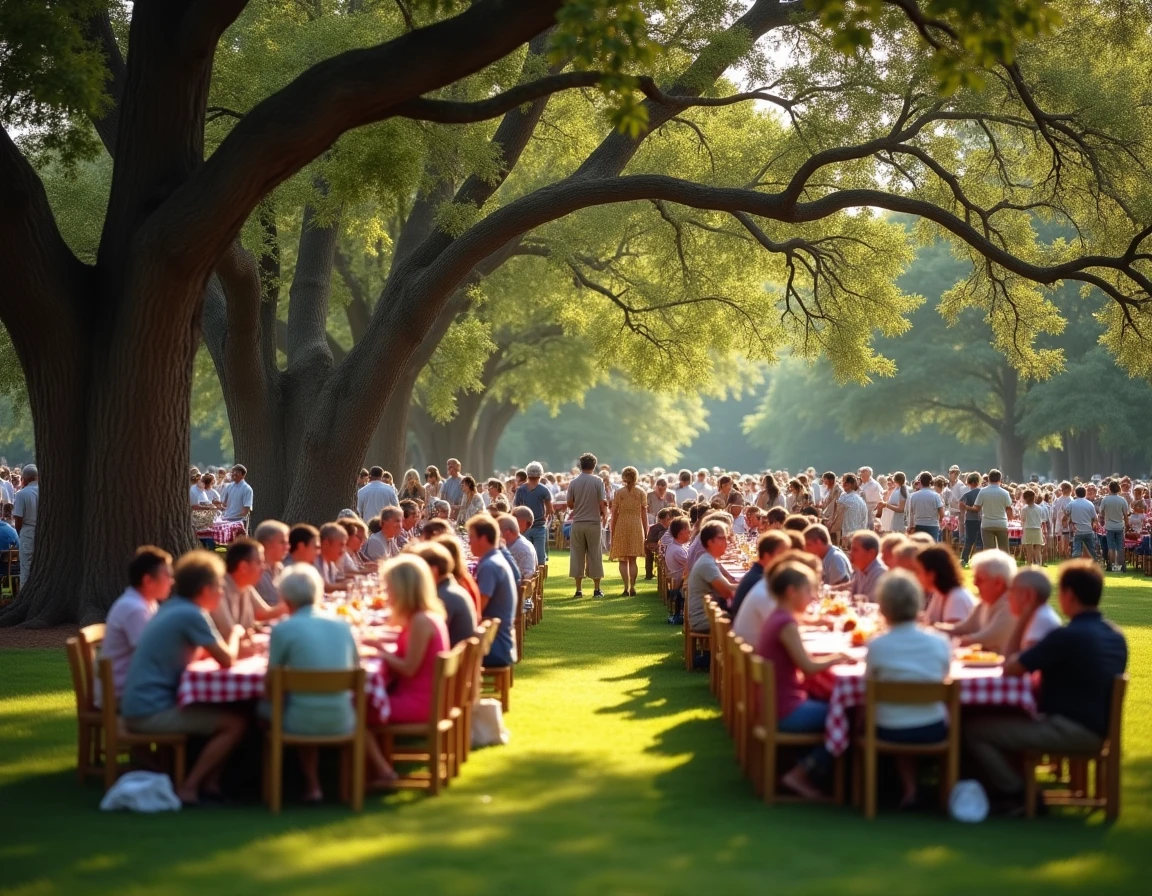
Bringing together several hundred cousins for a weekend is not just a simple family meal. When a family reunion exceeds a hundred participants, every logistical decision scales up. The Audoin family, followed by the show Grands Reportages on TF1 in May 2026, prepares this type of gathering over several years, with a schedule that resembles that of a festival rather than a family barbecue.
Family Governance and Organizing Committee: The Key to Giant Reunions

Online guides talk about “choosing a date” and “finding a venue.” For a reunion of several hundred people, the real starting point is elsewhere: establishing a stable organizing committee over time. Families that organize these events repeatedly, sometimes over several decades, operate with a structure that is almost associative.
This committee includes representatives from each family branch. Each one manages communication with their own lineage, updates contact information, and follows up with the undecided. Without this distribution, registrations stagnate and information gets lost in message loops.
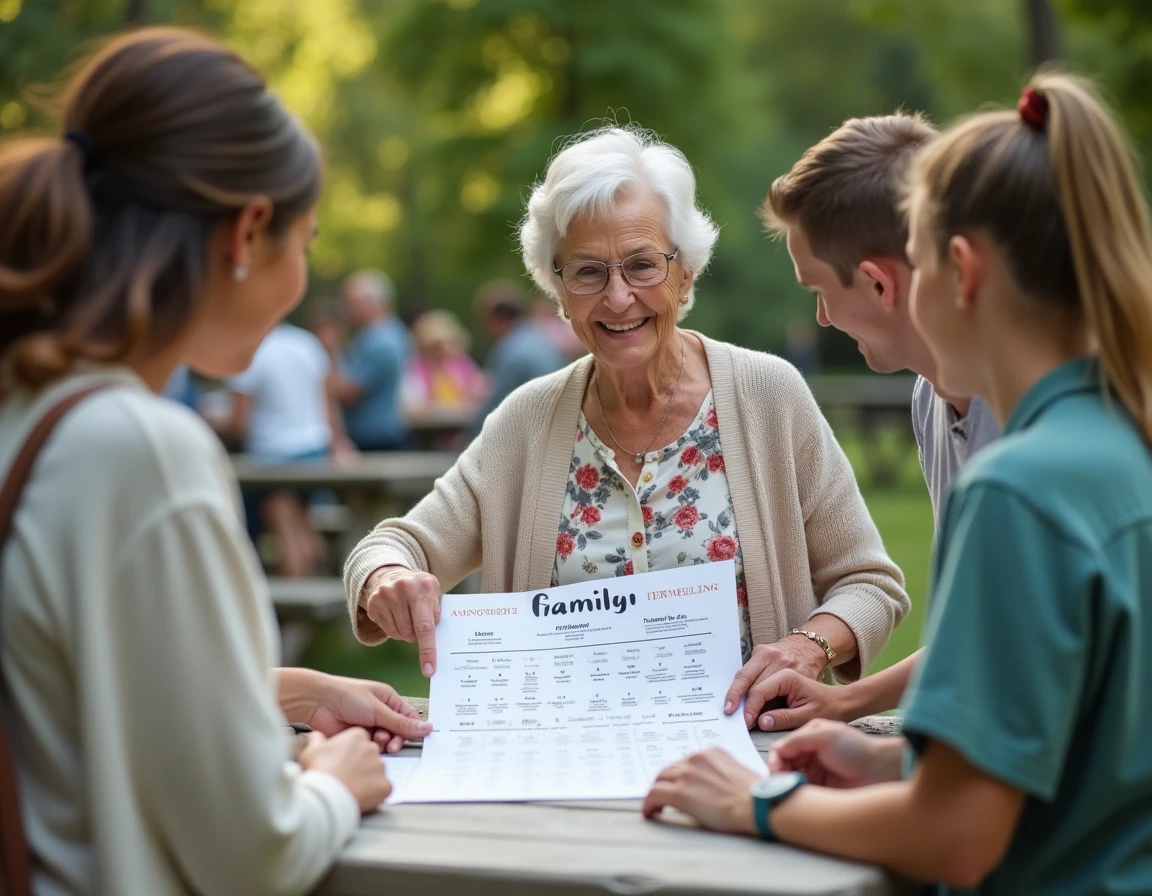
A centralized family file then becomes a permanent working tool. It is not just a simple address book, but a document that lists family ties, generations, food allergies, and accessibility needs. Some families integrate genealogical elements that the elders update over time.
This file also helps to reconnect with distant cousins who have lost touch. To delve deeper into the topic of large family gatherings in France, you can discover Kafkaiens and its articles dedicated to these extraordinary gatherings.
The transfer of the organizer’s role between generations presents a concrete challenge. When the historical coordinator retires from this role, the accumulated know-how (contacts, service providers, past mistakes) must be passed on. A shared online document, accessible to the entire committee, prevents starting from scratch with each edition.
Capacity for Reception vs. Accommodation Capacity: The Distinction That No One Makes
You are looking for a venue for your reunion. The estate advertises “capacity for 200 people.” Perfect, except that this figure often refers to daytime reception capacity, not on-site accommodation.
Beyond a few dozen participants, the difference between reception and accommodation becomes critical. An estate can host several hundred guests for a meal but may only accommodate a fraction of them. The rest will need to find nearby lodges, guesthouses, or campsites.
Three constraints are regularly underestimated:
- Parking: several dozen vehicles require dedicated space, often not provided by the venue. Check the available area before signing.
- Accessibility for people with reduced mobility and the elderly: dirt paths, stairs, and distant restrooms can exclude part of the family.
- Local noise regulations: a festive gathering in a rural area is still subject to municipal decrees. A prior exchange with the town hall avoids unpleasant surprises on the day.
The most organized families reserve the main venue for the collective day (meals, activities, ceremonies) and negotiate group rates with nearby accommodations. This approach can sometimes be cheaper than an oversized all-in-one estate.
Transparent Budget and Registration: Avoiding Tensions Between Branches
Money remains the most delicate subject in organizing a reunion. The larger the number of participants, the more misunderstandings multiply if financing is not clearly defined from the start.
A financial contribution per person, clearly announced before registration, limits friction. The organizing committee publishes a detailed budget forecast: venue rental, catering or food purchase, equipment rental (tables, tents, sound system), insurance. Each item is visible.
Registration is binding. Families that function well set a firm registration deadline, accompanied by the payment of the contribution. Without this lock, the number of guests fluctuates until the last week, making it impossible to plan meals or space.
For tight budgets, the “everyone brings a dish” model works up to a certain size. Beyond that, a caterer or local provider simplifies food logistics and reduces the mental load on the committee. The extra cost is often offset by reduced waste and smoother allergy management.
Memories and Family Legacy: Creating an Inheritance Beyond the Celebration
A large-scale reunion produces a wealth of photos, videos, and anecdotes that get scattered across everyone’s phones. Structuring the collection of these memories transforms a simple weekend into a family archive.
Some practical practices that have proven effective:
- Designate two or three volunteer photographers among the cousins, tasked with covering collective moments (group photos, games, meals) rather than relying on individual snapshots.
- Create a shared online album (Google Photos, iCloud) open to all, with a link shared the day after the event.
- Propose a collaborative memory book: each branch writes a page with its anecdotes, favorite photos, and a small family tree. This book, printed after the reunion, becomes an object passed down to the children.
Intergenerational activities and games (quizzes about family history, resemblance contests among cousins, reading old letters) strengthen bonds between the younger and older generations. These moments also produce the best memories, much more than a standardized entertainment program.
Organizing the largest family reunion in France does not require a huge budget or a degree in event planning. The foundation is a lasting committee, a living family file, and financial rules established from the very first invitation message. The rest, the weather, the reunions, the laughter, escapes all planning.