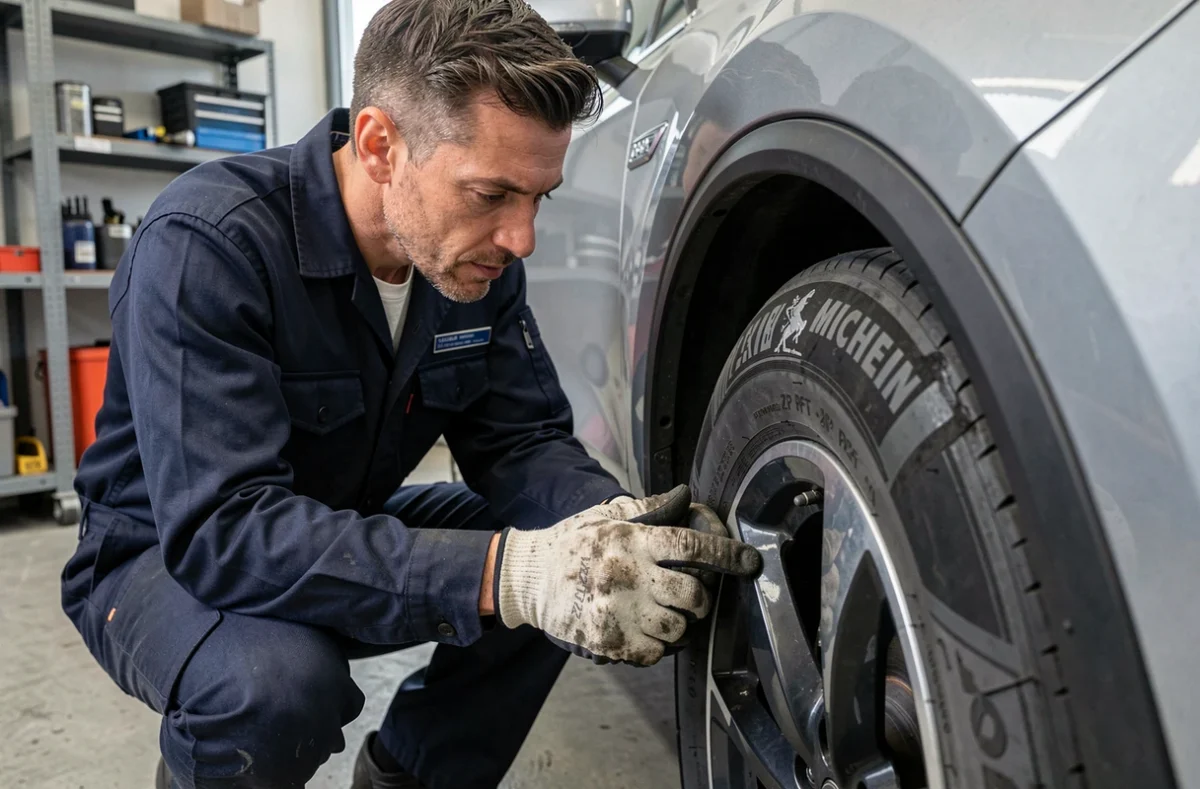
How to Identify a Michelin Run-Flat Tire and Understand Its Features?
Run-flat tires are fitted to a growing number of new vehicles, particularly German models, where they are often standard equipment. Michelin sells its own range of run-flat tires under specific names, but identifying them on the tire sidewall remains confusing for many drivers. Markings vary by manufacturer, and the same vehicle may accept run-flat tires from different brands, each with its own designation.
Understanding what these markings mean, how they affect driving and maintenance, and where the technology has its limitations can help you avoid costly mistakes when replacing a tire.
ZP and ZP SR markings on a Michelin tire sidewall
Michelin identifies its run-flat tires with the code ZP, which stands for Zero Pressure. This marking appears on the tire sidewall, usually after the tire size (for example, 225/45 R17 ZP). It means the tire is designed to support the vehicle’s weight even when it has lost all air pressure.
There is also a variant: the ZP SR marking, which denotes a version with a shorter run-flat range. The reinforced sidewall principle is the same, but the distance you can travel after a puncture is shorter than with a standard ZP tire.
To identify a Michelin run-flat tire on a vehicle, simply check the sidewall for one of these two markings. The older EMT (Extended Mobility Tyre) designation still appears on some older models, but Michelin now primarily uses the ZP nomenclature.
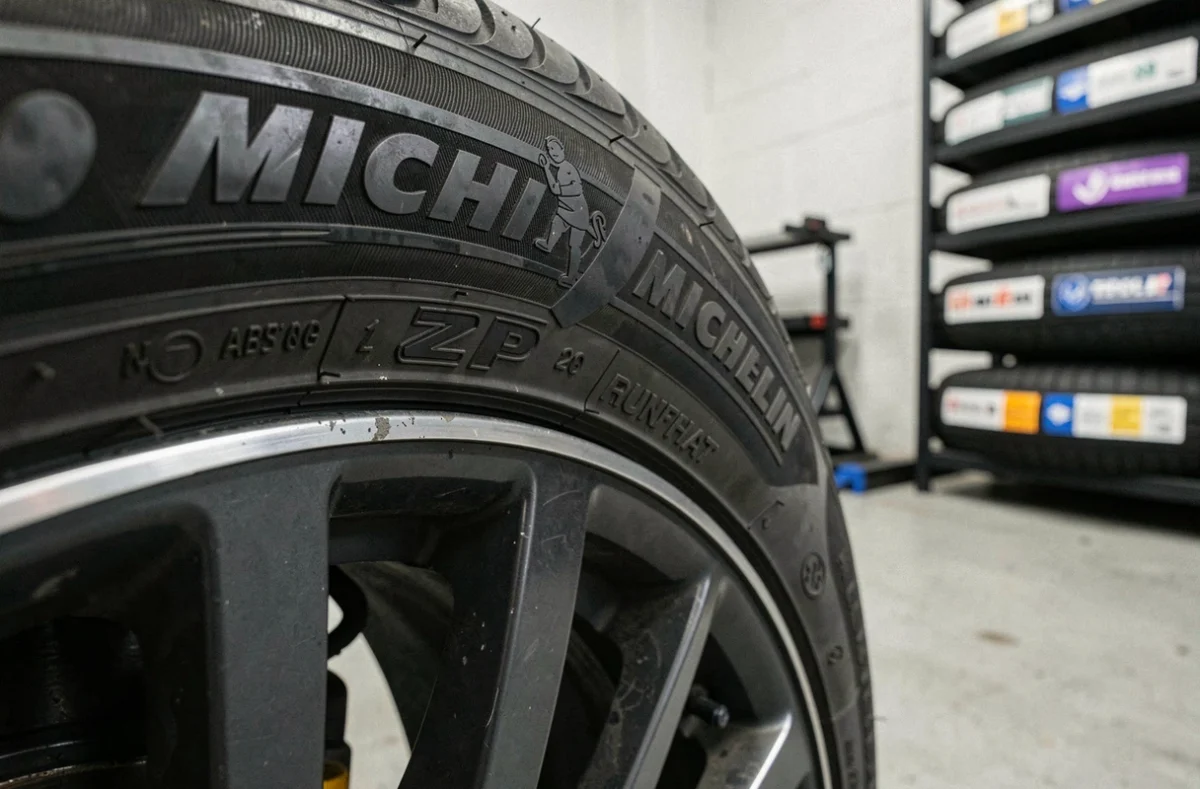
A common pitfall is confusing Michelin’s markings with those used by other manufacturers. Pirelli uses “r-f”, Bridgestone marks its tires “RFT”, Continental uses “SSR”, and Goodyear uses “ROF”. If you replace a Michelin ZP tire with a competitor’s model, check that the sidewall bears that brand’s specific marking, as the word “run-flat” is not always written out in full.
Reinforced sidewalls: what sets a run-flat tire apart from a standard tire
The fundamental difference between a run-flat tire and a standard tire lies in the thickness of the rubber on the sidewalls. On a Michelin run-flat, this area is considerably thicker and more rigid. This construction prevents the tire from collapsing or coming off the wheel when the pressure drops to zero.
A standard tire loses its shape within seconds after a puncture, and the driver immediately feels the vehicle become unstable. With a run-flat, a puncture can be almost imperceptible from behind the wheel. The tire retains its shape and the vehicle remains stable, which is both the main advantage and a potential risk.
The risk is that the driver may not realize they are driving on a deflated tire. That is why vehicles equipped with run-flats must have a tire pressure monitoring system (TPMS). Without this sensor, there is no warning to alert the driver, and continued driving on a flat tire eventually causes irreversible damage to its internal structure.
TPMS and Michelin run-flat tires: a technical pairing that should not be separated
TPMS (Tire Pressure Monitoring System) is mandatory on new vehicles in the European Union. On a vehicle equipped with run-flat tires, its role goes beyond convenience: it is the only reliable way to detect pressure loss in a tire that shows no visible signs of a puncture.
A faulty TPMS sensor or a sensor battery nearing the end of its life can turn a safety advantage into a blind spot. The driver may then continue without realizing the tire is flat, exceed Michelin’s recommended run-flat limits, and damage the tire beyond repair.
Before every tire change, checking that the TPMS is working properly is normally part of a professional installer’s procedure. When you buy Michelin run-flat tires online, this check is not included and remains the responsibility of the driver or the garage fitting the tires.
Run-flat limits after a puncture: a variable figure
The often-quoted guideline of being able to drive a few dozen kilometers on a flat tire at reduced speed is not a universal figure. The actual range depends on several factors:
- The vehicle’s load at the time of the puncture (a full trunk puts more strain on the reinforced sidewalls)
- The speed maintained after pressure loss (driving above the recommended limit drastically reduces the distance you can travel)
- The outside temperature and road conditions (heat and a damaged road surface accelerate wear to the internal structure)
Michelin does not guarantee the same range for all its ZP models. The vehicle owner’s manual is the reference for the limits that apply to the original tire fitment.
Repairing and replacing a Michelin run-flat tire
There is no definitive answer to whether a run-flat tire can be repaired after being driven on while flat. Contrary to popular belief, a punctured run-flat is not automatically beyond repair. Whether it can be repaired depends on the type of damage, the distance driven while flat, and the condition of the internal structure once the tire has been removed from the wheel.
A professional must remove the tire and inspect its interior before making a decision. If the reinforced sidewalls have been excessively deformed or the inner rubber shows signs of overheating, the tire cannot be repaired. Otherwise, a mushroom plug (internal patch) may be an option, depending on the manufacturer’s recommendations.
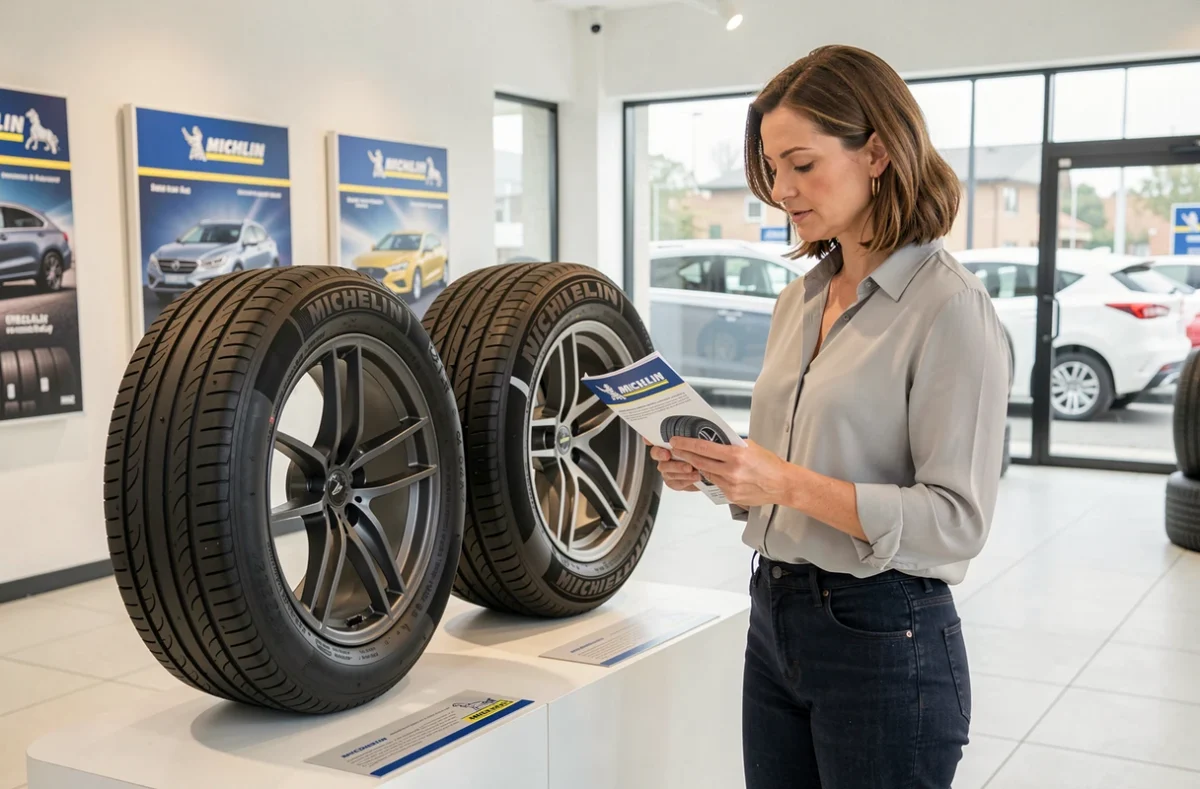
Replacing a Michelin run-flat tire costs considerably more than replacing a standard tire of the same size. This price difference leads some drivers to consider switching to standard tires.
Switching from run-flat to standard tires: checks to make first
Some vehicles supplied with run-flat tires as standard equipment have no spare wheel, jack, or wheel wrench. The manufacturer has designed the trunk storage space on the assumption that run-flat capability makes this equipment unnecessary.
- Check the vehicle manual to see whether a spare wheel is available as an option and whether there is space to store it
- Make sure an inflation or temporary repair kit is available in the vehicle if there is no space for a spare wheel
- Confirm with the manufacturer that fitting non-run-flat tires will not affect the vehicle’s warranty
Switching to standard tires without considering these points could leave you stranded after a puncture, with no immediate way to get back on the road. The lack of a spare wheel is the main obstacle to changing tire technology on vehicles designed for run-flats.