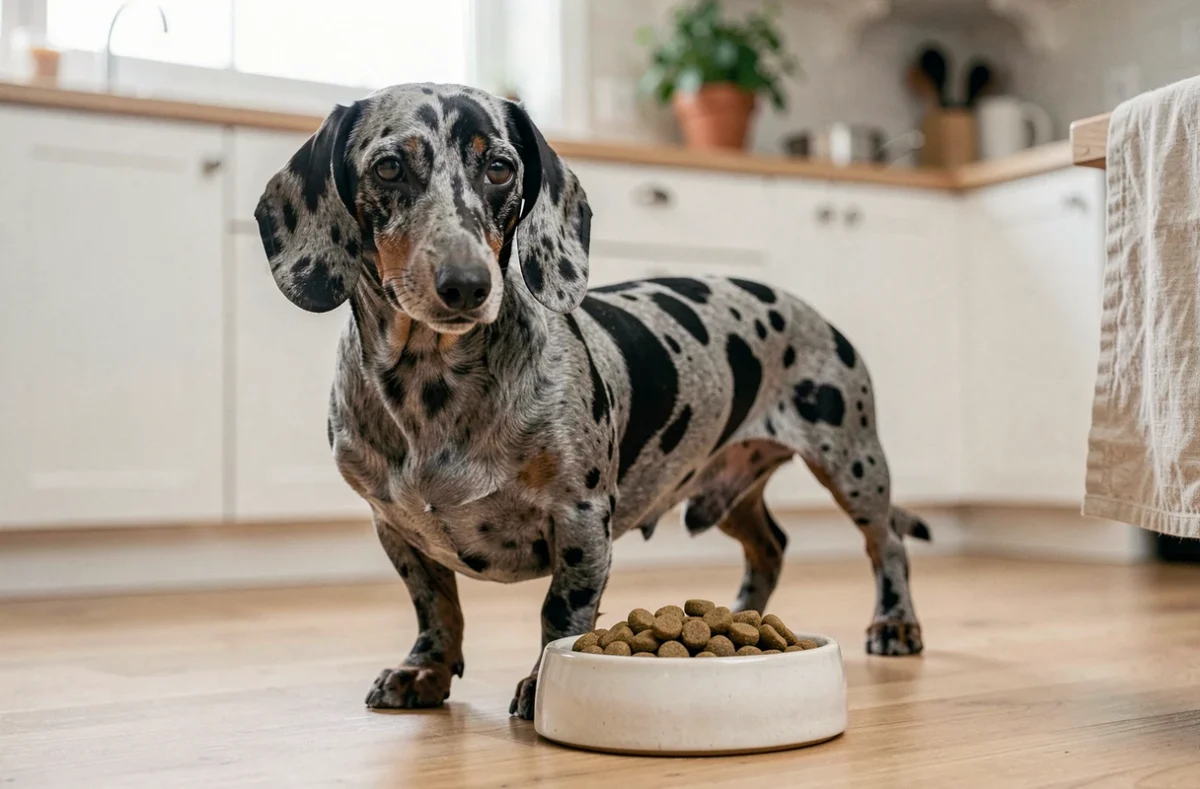
The smooth-haired harlequin dachshund has a genetic heritage linked to the merle gene, which influences the pigmentation of its coat. This particularity does not directly alter its nutritional needs, but it adds to an already demanding morphology in terms of diet. With an elongated body, short legs, a predisposition to overweight, and spinal fragility, the diet of this dog is not just about choosing a brand of kibble.
Pancreatitis in the dachshund: an underestimated dietary risk
Articles on dachshund nutrition almost always focus on the spine and disc herniation. The risk of pancreatitis is less publicized but just as real. This inflammation of the pancreas, triggered by excess fat in the diet or by rich table scraps, can cause severe abdominal pain, vomiting, and rapid dehydration.
The dachshund is among the breeds most affected by this condition. A single overly fatty meal (a piece of cheese, a chicken skin, a bit of deli meat given as a reward) can be enough to trigger an acute episode in a predisposed individual. Fat-rich foods are the primary triggering factor for pancreatitis in this breed.
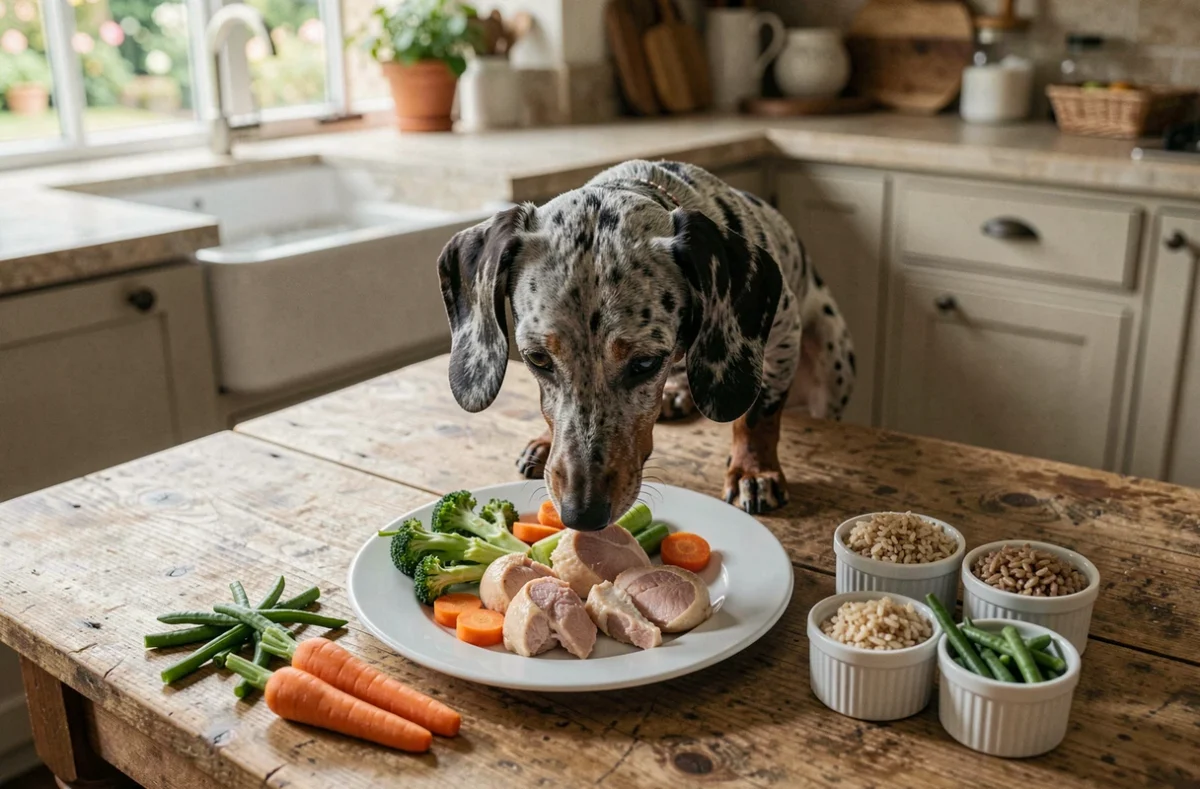
To limit this risk, it is best to select foods with a moderate fat content and to categorically exclude high-fat table scraps. A harlequin dachshund that persistently begs at the table (a common behavior in the breed) should not be rewarded with human food.
Body Condition Score: the only reliable method to adjust rations
The dosage charts printed on kibble packages provide broad ranges that are rarely suitable for a small-sized dachshund. A measuring cup adds an additional layer of inaccuracy. For a dog where a few extra grams directly impact the intervertebral discs, this approximation is problematic.
Comparing dachshund kibble on Attitude Canine allows you to identify formulations suitable for this morphology, but the amount given must be adjusted individually using the Body Condition Score (BCS).
The principle is simple: the ribs should be palpable without applying too much pressure, and the waist should remain visible when observing the dog from above. If the ribs disappear under a layer of fat, the ration is too generous, regardless of the amount indicated on the packaging. This body assessment, recommended by the Merck Veterinary Manual, is more reliable than a standard weight measurement.
Weighing kibble to the gram with a kitchen scale rather than using a measuring cup reduces daily discrepancies. For a miniature or kaninchen harlequin dachshund, a repeated error of a few grams each day for months can shift the body condition.
Treats and rewards: the caloric trap of training
The dachshund is a food-motivated dog, which makes training easier but creates a nutritional blind spot. Every reward treat, every piece of cheese used as bait during a recall exercise, adds to the daily ration. Many owners do not account for these contributions.
The basic rule, reiterated by several recent veterinary recommendations, is to keep treats to a maximum of 10% of the daily caloric intake. This threshold includes training rewards, chew bones, and any food given outside of main meals.
For a smooth-haired harlequin dachshund, here’s how to apply this rule concretely:
- Deduct the weight of treats given throughout the day from the evening kibble ration, gram for gram
- Favor low-fat, small-sized treats suitable for the jaw of a dog of this size
- Reserve food rewards for training sessions, and use play or petting as reinforcement the rest of the time
- Never give table scraps as a reward, even in small amounts
Proteins, carbohydrates, and joints: reading the composition beyond marketing
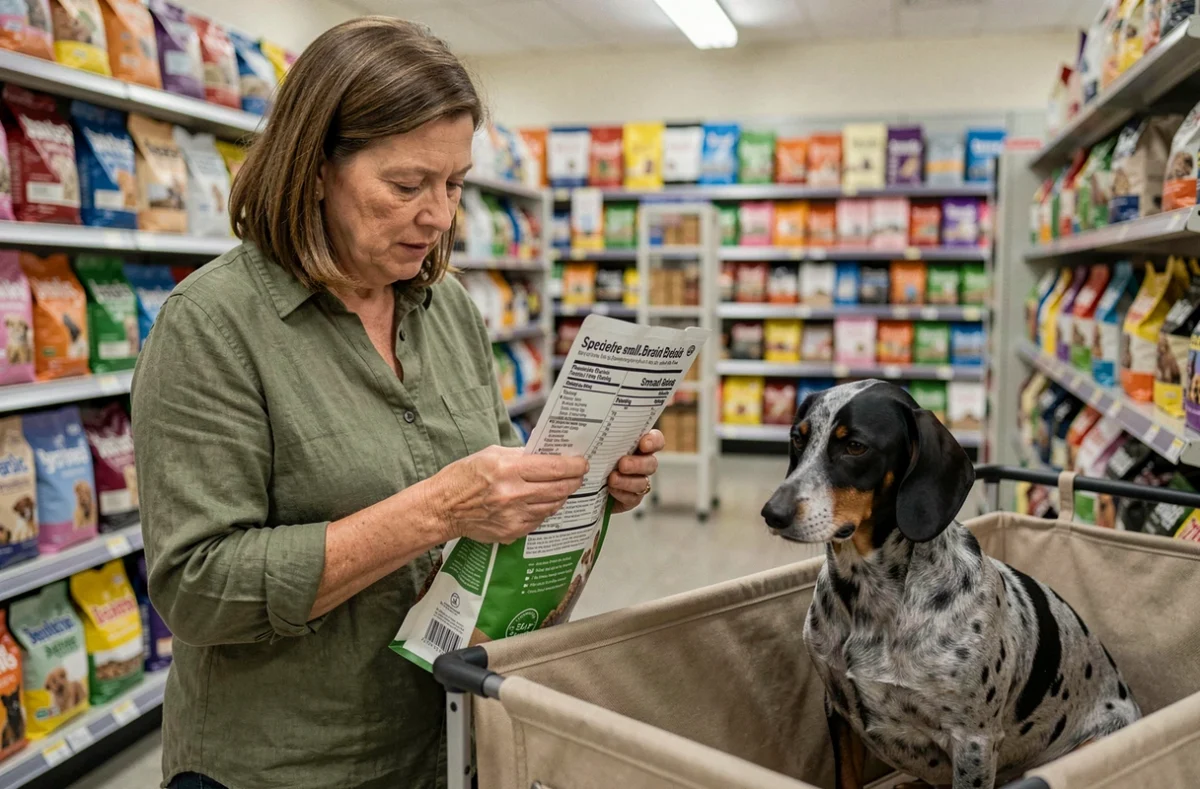
Kibble packaging for small dogs often highlights appealing arguments (duck recipe, grain-free, joint formula). For a harlequin dachshund, three composition criteria deserve careful reading.
A high level of animal protein remains the primary indicator of quality. The dachshund is a carnivore with omnivorous tendencies, and its diet should primarily consist of animal-based proteins. Formulas where meat appears first on the ingredient list are preferable to those that start with grains or starches.
The fat content, as mentioned earlier, should remain moderate to limit the risk of pancreatitis and overweight. Conversely, a fat content that is too low can lead to a dull coat and dry skin, which is more noticeable on a short-haired dog.
The presence of glucosamine and chondroitin in the formulation contributes to supporting joint cartilage. For a dog whose spine endures permanent mechanical stress, these protective components for intervertebral discs are not just a marketing argument but a selection criterion.
- Check that the protein source is identified (chicken, lamb, salmon) and not generic (“animal by-products”)
- Ensure that the fat content is explicitly stated on the label
- Verify the presence of chondroprotectors in the analytical composition
Adjusting meal frequency to the profile of the harlequin dachshund
Two meals a day is the norm for an adult dachshund. Splitting the ration limits gastric distension and maintains a stable energy level. For a dachshund puppy, three to four meals a day are necessary before gradually transitioning to two by the end of the first year.
A neutered dachshund sees its energy needs decrease significantly. Without adjusting the ration, weight gain can occur within weeks. The BCS, performed every two to three weeks after neutering, allows for intervention before overweight becomes permanent.
A senior dachshund requires a complete reevaluation of its ration with a veterinarian, taking into account decreased activity, changes in muscle mass, and kidney health. The available data does not allow for a universal age for this transition: some dachshunds show signs of slowing down as early as seven years, while others remain active well beyond.
The diet of a smooth-haired harlequin dachshund relies on a balance between ingredient quality, precise dosing, and regular body monitoring. A kitchen scale and rib palpation remain the two simplest and most effective tools to keep this dog at its ideal weight.