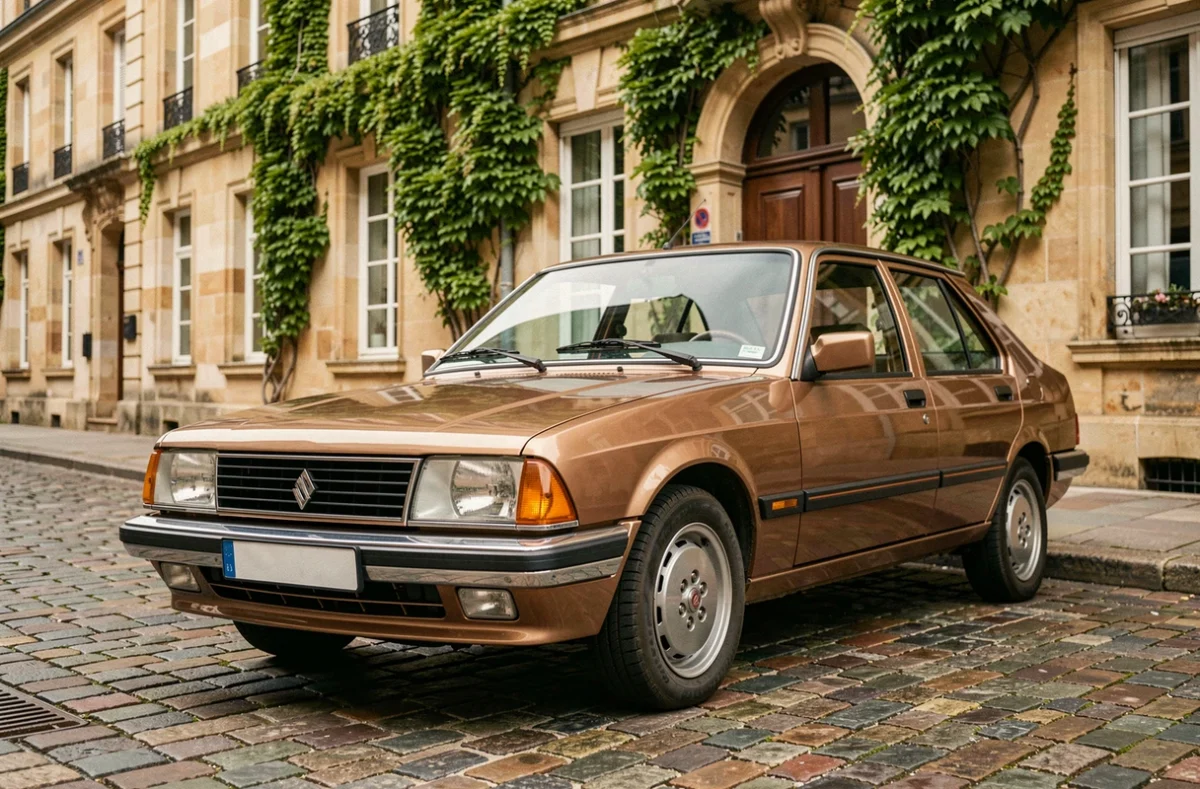
The Renault 30 TX, produced from 1978, is the most advanced version of Renault’s large hatchback sedan. Under its two-body shell, it housed a V6 PRV engine with electronic fuel injection paired with a five-speed manual transmission, a rare combination in the French automotive landscape of the late 1970s. This model concentrated technical choices that competitors did not always offer on vehicles of equivalent range.
Electronic fuel injection and five-speed gearbox on the Renault 30 TX
The early Renault 30 TS relied on a carbureted V6 PRV engine, coupled with a four-speed manual gearbox. The transition to the TX version marked a clear technical leap. The adoption of electronic fuel injection allowed the power to rise to 143 horsepower while improving the fuel delivery consistency of the six-cylinder engine.
The fifth gear, added on the TX, was not just a marketing argument. On the highway, it significantly reduced engine speed, which helped limit mechanical noise in the cabin and control fuel consumption, a sensitive point for a V6 of this displacement.
For those who wish to delve deeper into the specifications of this sedan, it is possible to learn more on Clean Auto regarding its entire technical sheet.
This mechanical architecture placed the Renault 30 TX in a territory usually occupied by German manufacturers, at a time when fuel injection was still reserved for premium models at most European brands.
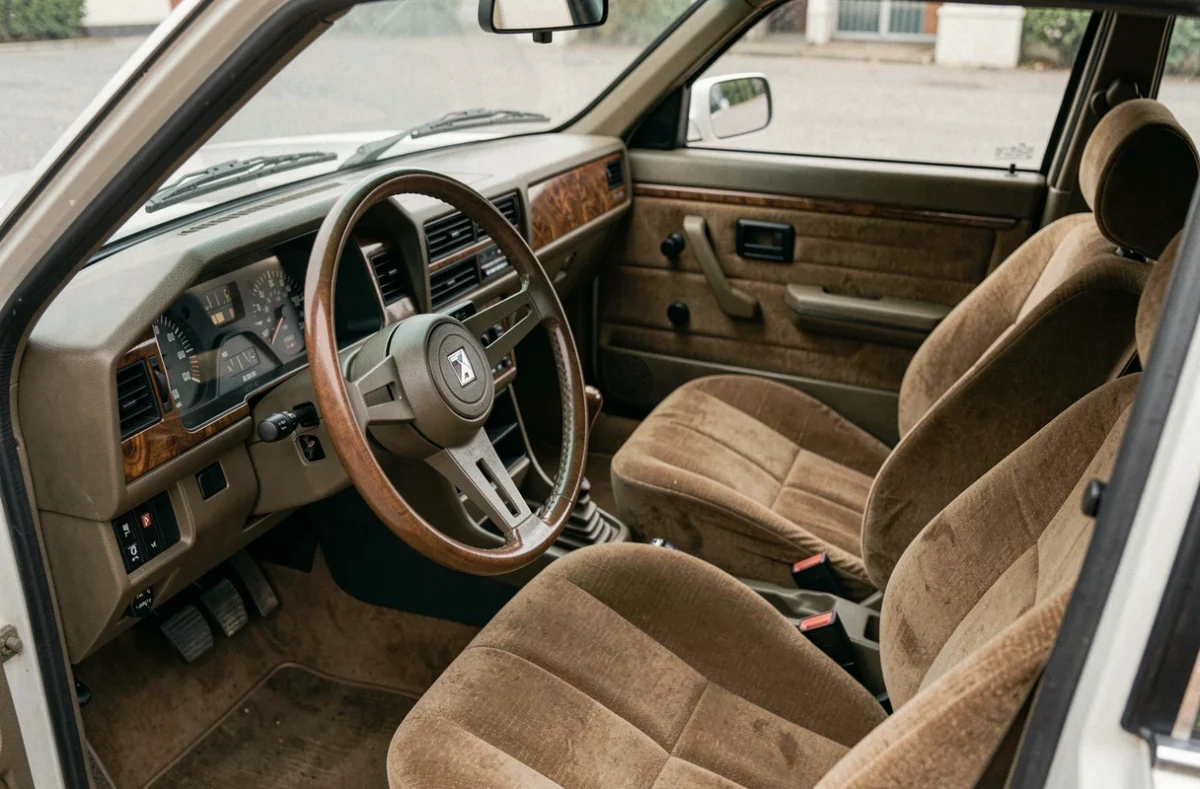
Disc brakes on all four wheels and R30 chassis
A rarely highlighted aspect of the Renault 30 TX concerns its braking system. The car featured disc brakes on all four wheels. In comparison, some direct competitors of the same period, like the Audi 100 Avant, still combined discs at the front with drums at the rear.
This technical choice was not trivial. On a sedan of this size, with a front-mounted V6 engine and front-wheel drive, the distribution of braking directly influences stability during deceleration. The four discs provided superior progression and endurance, especially on the long highway journeys for which the R30 TX was intended.
Front-wheel drive and road handling
The choice of front-wheel drive on a high-end V6 vehicle was atypical. German manufacturers like Mercedes and BMW favored rear-wheel drive. Renault embraced a different philosophy, inherited from its front-wheel drive sedans, which prioritized interior space and traction on slippery surfaces.
The front axle had to manage both traction and steering, with a relatively heavy block above. Renault engineers compensated for this constraint with specific suspension settings, aiming to maintain neutral handling in corners despite the load on the front axle.
Sagem onboard computer and Normalur cruise control
The onboard electronics of the Renault 30 TX went well beyond what was typically found on a French sedan of that era. Two features clearly distinguished it:
- An onboard computer designed by Sagem, offered as an option, capable of displaying consumption and trip data, a feature that would not become widespread until the 1990s
- An electronic speed limiter called Normalur, a device still very rare in the European market at the end of the 1970s
- The electronic fuel injection itself, which represented a form of digital engine management before the era of widespread electronic control units
These features reflected a technological ambition that Renault sometimes struggled to have recognized against German brands, more closely associated with the image of high-end vehicles.

Trunk volume and hatchback modularity of the Renault 30
The two-body silhouette of the Renault 30 has often been perceived as an aesthetic handicap compared to the classic three-box sedans from Peugeot or Mercedes. Practically, this hatchback represented a concrete advantage that the numbers confirm.
The trunk offered 395 liters in normal configuration and 1,550 liters with the rear seats folded down. For a large touring car of this range, this modularity was exceptional. Competing sedans with a traditional trunk simply could not compete in this area.
A concept ahead of its market
The hatchback principle on a high-end vehicle anticipated by several years what models like the Citroën CX Prestige or certain Audis would gradually integrate. Renault offered as early as the late 1970s a format that the automotive market would not fully appreciate until the rise of station wagons and liftbacks in the following decades.
This versatility made the R30 TX a car equally at ease on a presidential trip (François Mitterrand used it) as for a family vacation departure, with a useful volume that few French sedans of the time could match.
Value and rarity of the Renault 30 TX today
Well-preserved examples of the Renault 30 TX have become very rare. Corrosion, difficulties in sourcing specific parts for the V6 PRV, and prolonged disinterest from collectors have reduced the surviving fleet to a handful of vehicles.
This rarity is beginning to translate into a renewed interest. The R30 TX embodies a specific moment in French automotive history, when Renault attempted to compete with German sedans using original technical solutions rather than copying their formulas.
Car enthusiasts interested in this model primarily seek documented examples, with a well-maintained service history. The V6 PRV engine, shared with the Peugeot 604 and Volvo 264, further facilitates the search for certain engine parts, but body and interior elements specific to the R30 remain difficult to find.