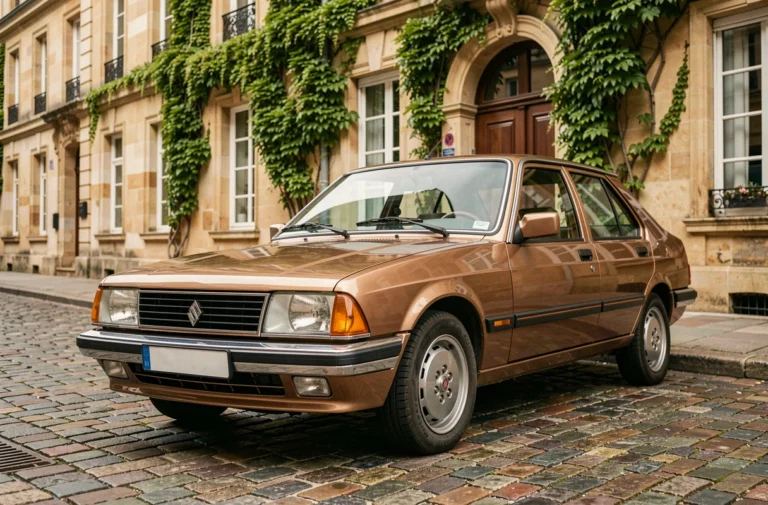
A car enthusiast taking their classic car out for a Sunday gathering does not ask the same questions as a buyer of a plug-in hybrid SUV. Yet both share a common reality in 2026: the rules are changing rapidly, mandatory equipment is piling up, and unpleasant surprises lurk in administrative details more than under the hood.
Technical inspection and safety recalls: what really holds up at the center
We tend to check brakes, tires, and emissions before going for a technical inspection. Recently, another criterion can lead to a critical failure with a driving ban starting the next day: an unresolved safety recall classified as “stop drive.”
Specifically, if the manufacturer has issued a critical recall on your model and the repair has not been made, the inspector will detect it in the database and may refuse validation. According to 60 Millions de consommateurs (article published on September 7, 2026, updated on September 30, 2026), the vehicle cannot be driven until the correction is made.
Before making an appointment, it is advisable to check on the manufacturer’s website or via the VIN number if a recall is in progress. This is a reflex that takes two minutes and avoids an unnecessary trip to the center.
For classic car enthusiasts as well as those driving recent models, this check is now as important as a glance at the brake pads. Enthusiasts who follow automotive news daily can learn more on Otopassion to stay informed about this type of regulatory change.

Mandatory driving aids: the button everyone is looking for
Since July 7, 2026, the advanced driver distraction warning (ADDW) is equipped in all new cars registered in the European Union, including models whose approval is prior to 2024. This device adds to an already long list: intelligent speed adaptation, drowsiness alert, reverse detection.
On the ground, feedback varies on this point. Some drivers appreciate the safety net. Others find the alerts intrusive, especially on mountain roads or during sporty driving. Several manufacturers offer a physical button to deactivate driving aids, and drivers frequently use it.
This observation speaks volumes about the gap between regulation and actual usage. For an enthusiast, the question is not about rejecting safety, but about maintaining control over the vehicle’s behavior. Checking for the presence and accessibility of this button is part of the criteria to tick off during a test drive, alongside driving position or engine response.
Classic car registration: administrative constraints to anticipate
Driving a classic car requires a specific registration issued after certification from the FFVE. The process involves several practical constraints:
- The vehicle must be over thirty years old and must not have undergone major modifications compared to its original configuration. Any significant transformation (engine change, chassis modification) can jeopardize the issuance of the certificate.
- Classic car insurance, often cheaper than standard insurance, generally imposes a limited annual mileage and the ownership of another vehicle for daily use.
- Technical inspection remains mandatory for classic vehicles. The points checked differ from those of a modern vehicle, but an unresolved safety recall remains a blocking issue.
For an enthusiast who is torn between keeping a standard registration and switching to classic, the calculation mainly depends on actual mileage and access to low-emission zones (ZFE). A vehicle with classic registration benefits from exemptions in certain low-emission areas, which changes the game for owners in urban areas.
Reliability of fast charging stations: an underestimated purchase criterion
There is much talk about range and charging time, but rarely about the likelihood of encountering a non-functioning station. The reliability of fast charging networks is becoming a regulatory topic in its own right. In the UK, the Public Charge Point Regulations now impose a legal annual availability target of 99% on fast charging operators, with financial penalties for non-compliance.
In France, the situation is not regulated in the same way, but the trend is moving in that direction. For an enthusiast considering switching to electric or plug-in hybrid, network coverage is no longer sufficient as a criterion. The concrete question to ask the dealer or to check before a long trip is: what is the actual availability rate of the stations on the routes you take.
Large retail chains are getting involved and offering competitive rates on their stations, without subscription. Recovering a hundred kilometers of range on an efficient electric vehicle can then represent a very modest cost. The trade-off: these slow stations require time, often more than an hour for a significant charge.
Modifications on classic vehicles: legal limits to know
Installing a more powerful engine, changing the running gear, modifying the exhaust: the temptation is strong on a classic car. However, regulations impose a strict framework. Any major modification may require a new approval of the vehicle from the DREAL, and certain transformations make it impossible to maintain classic registration.
The most common trap concerns restomods, those classics updated with modern components. A change of engine or the addition of brakes from another model may be refused if the modification is not approved. Going to the DREAL before the work avoids ending up with an unregistrable vehicle.
The automotive world in 2026 mixes passion and paperwork more than ever. Whether driving a classic on Sundays or an electric vehicle daily, good decisions are made as much in the garage as in front of an administrative screen.