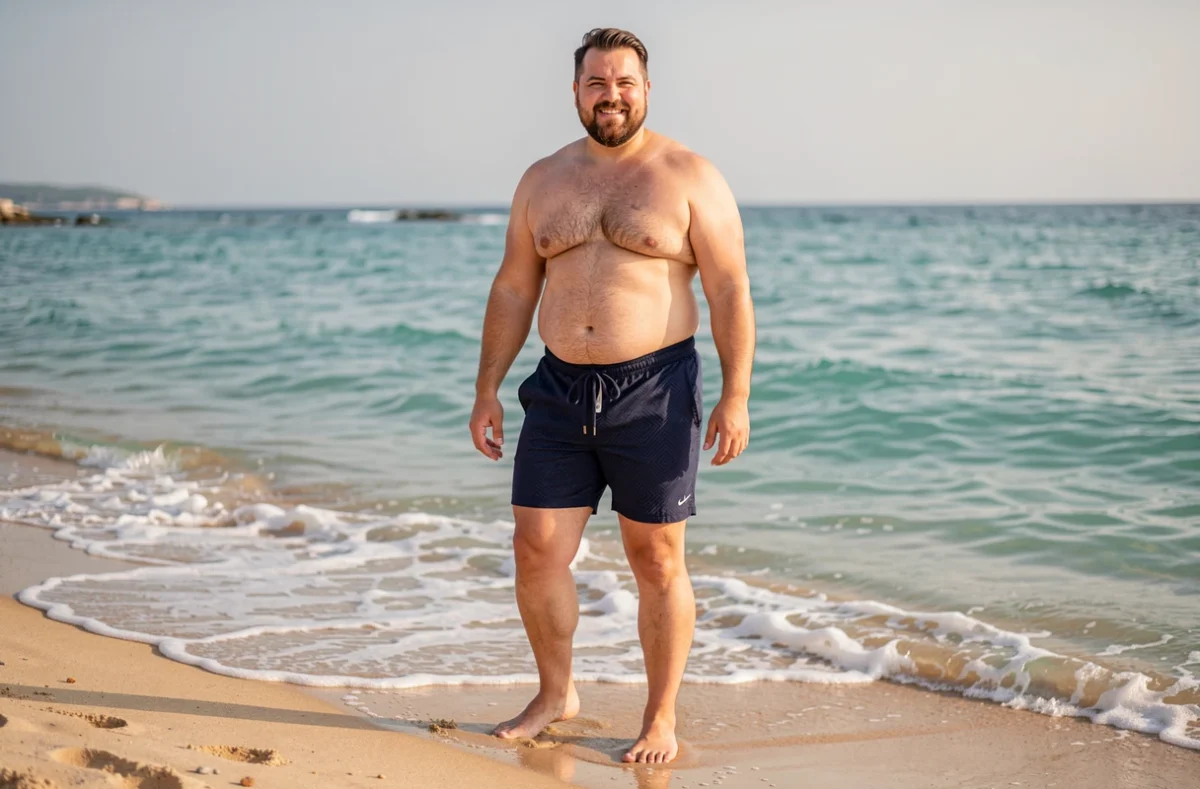
Swimwear for Big and Tall Men: Summer Styles That Flatter Your Figure
A men’s swimsuit for a larger build is defined first and foremost by three technical factors: waistband height, inseam width and thigh room. These three measurements determine real comfort by the water far more than the colour or print.
Choosing a cut suited to a larger build means balancing tummy support, freedom of movement and the fabric’s durability during repeated activities (swimming, walking on sand and sitting for extended periods).
Waistbands for men’s swimwear in larger sizes: elasticated, drawstring or adjustable
The waistband is the first point of contact between the swimsuit and the body. On a larger frame, it is under greater tension, especially when sitting or swimming. Three fastening systems are available, each with a different effect.
A wide elasticated waistband (four centimetres or more) distributes pressure around the entire waist. It prevents the “sausage” effect caused by a thin elastic band digging into the skin above the hips. For a larger man, this is the most stable option when the swimsuit is wet and weighed down by water.
A drawstring, often combined with elastic, allows for a manual adjustment. Its advantage is that it can accommodate the difference in waist measurement between standing and sitting, which can be several centimetres for a heavier man. A comprehensive guide to swimwear suited to larger men explains how different cuts work for different body shapes.
A waistband with a snap or hook-and-loop fastening, which is less common, provides a firm hold. It works well on board shorts, but does not handle repeated bending well and can irritate the skin beneath a prominent belly.
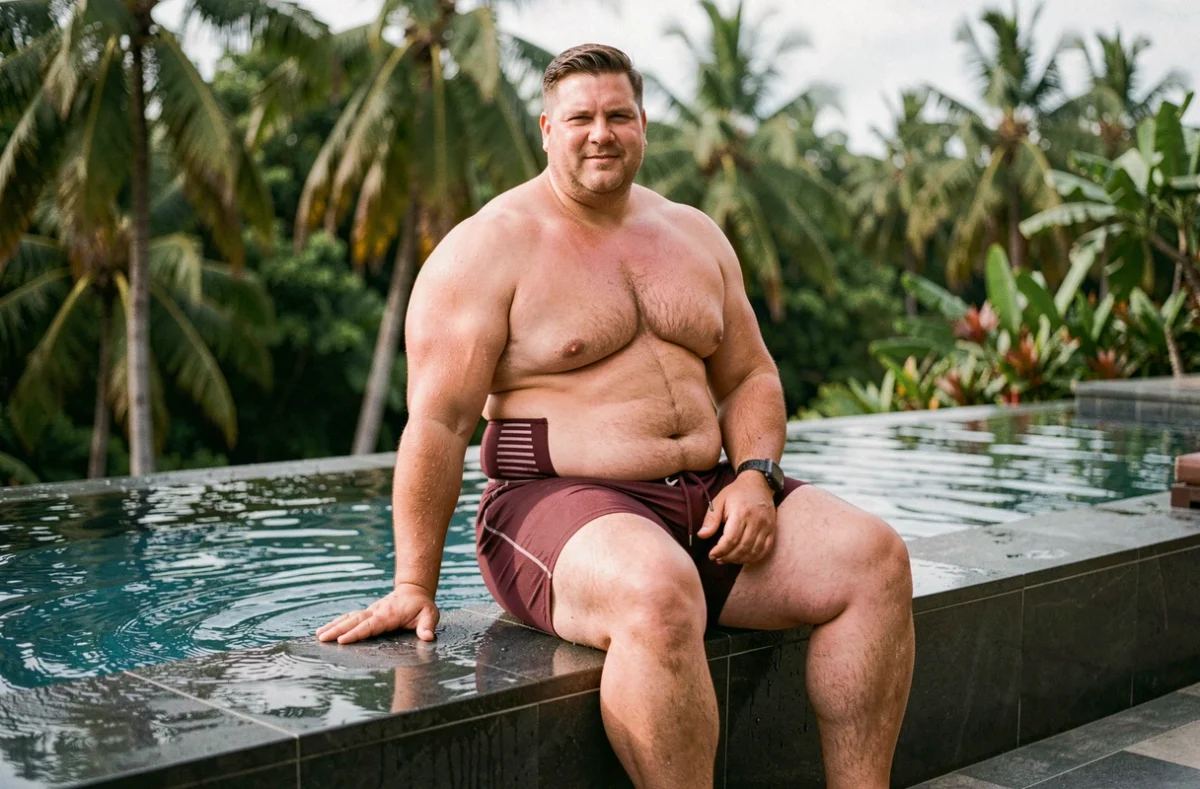
Plus-size swimwear: thigh room and shorts length
Swimwear that is too tight around the thighs causes chafing within minutes of walking. If it is too loose, it billows in the water and creates drag that makes swimming harder. Check thigh room with the leg laid flat: you should be able to slide two fingers between the fabric and your skin without forcing them in.
Shorts length affects how your silhouette looks. Swimwear that ends above the knee makes the legs look longer and avoids the “cut-off trousers” effect of long board shorts. For a larger man, mid-thigh length (about five centimetres above the kneecap) is the most practical compromise.
- Short shorts (above mid-thigh): show more leg and suit builds with muscular rather than broad thighs; less flattering if the belly hangs low.
- Mid-thigh shorts: versatile, define the silhouette without making the legs look shorter, and are easy to find in plus sizes.
- Board shorts below the knee: cover the thighs but make the silhouette look heavier and hinder swimming by creating drag.
Comfort in motion: swimming, walking and sitting
Swimwear that looks flattering in a beach photo is no guarantee of comfort during activity. To properly test swimwear for a larger man, try it in three specific situations.
When swimming, wet fabric should not slip over the hips. Swimwear without an inner mesh lining slips down as soon as the body stretches out in the water. The lining keeps it in place and reduces direct contact between the skin and the outer seams.
When walking, the inner thigh seams are the main source of friction. Flatlock seams reduce rubbing. Traditional overlocked seams, on the other hand, create a raised ridge of thread that can irritate damp skin within minutes.
When sitting, the waistband rides up at the back if the fabric does not have enough vertical stretch. Swimwear with elastane in the main fabric (not just the waistband) stays in place as the body bends. Elastane in the back panel is the most overlooked factor, yet it is the most important for lasting comfort on a sun lounger or low wall.
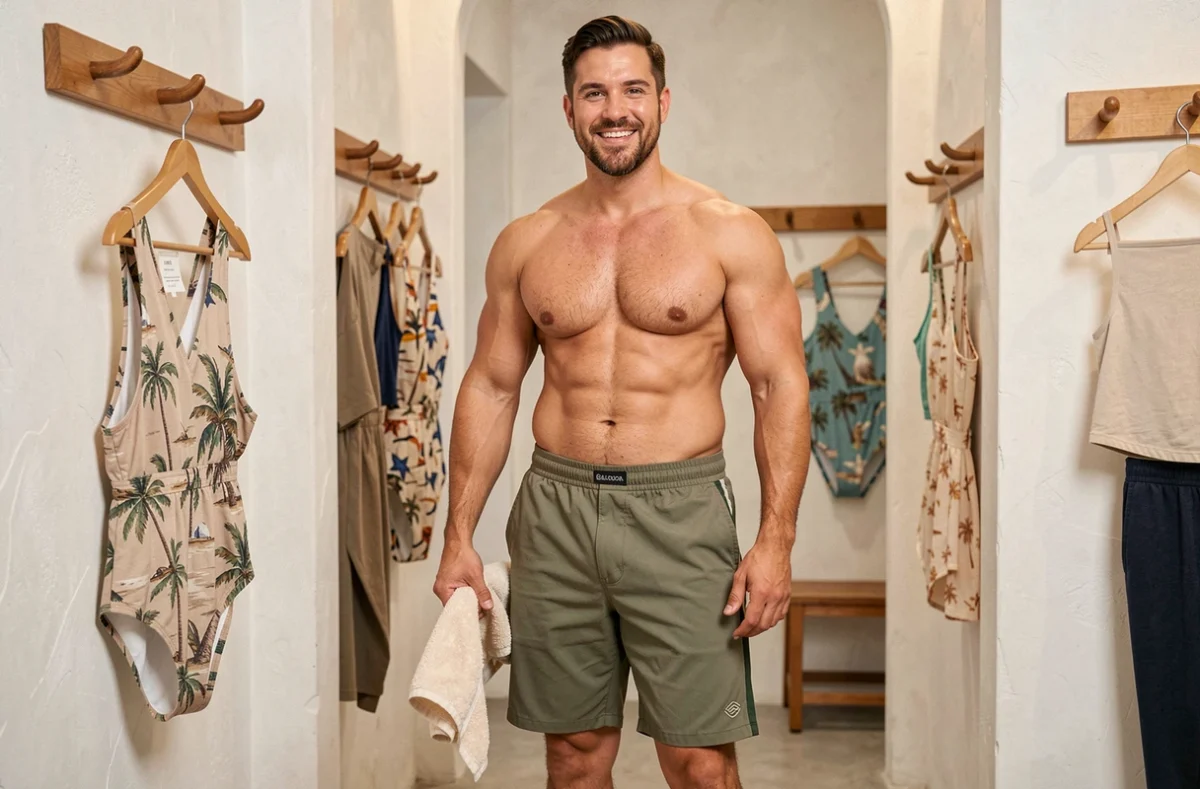
Fabric and water-repellent finishes: what product descriptions don’t always tell you
Most swimsuits are made from polyester or polyamide, two synthetic fibres that dry quickly but release plastic microfibres when washed. In France, environmental information on clothing now includes details about manufacturing stages and, for relevant products, the issue of microfibres.
Water-repellent finishes, intended to speed up drying, are worth checking. French regulations on PFAS (per- and polyfluoroalkyl substances used in some water-repellent finishes) changed in 2025. Checking the type of water-repellent finish in the product description can help you avoid substances that are being restricted.
- Recycled polyester: quick-drying and colourfast, but check for elastane if you want stretch.
- Polyamide: softer to the touch, slightly heavier when wet and more resistant to abrasion from sand.
- “PFC-free” water-repellent finish: an alternative to PFAS, slightly less effective but in line with regulatory changes.
One final practical point: separate collection of used textiles became mandatory in the European Union in 2025. Taking an old swimsuit to a textile collection point instead of putting it in the bin is no longer voluntary; it is a requirement that also applies to synthetic swimwear.
The swimsuit that flatters a larger build is not the one that hides the body under as much fabric as possible. It is the one whose waistband stays in place as you move, whose seams do not leave marks on your skin after an hour of walking, and whose fabric holds its shape after several swims. A good plus-size swimsuit should be tested standing up, sitting down and wet—not just in front of a mirror.