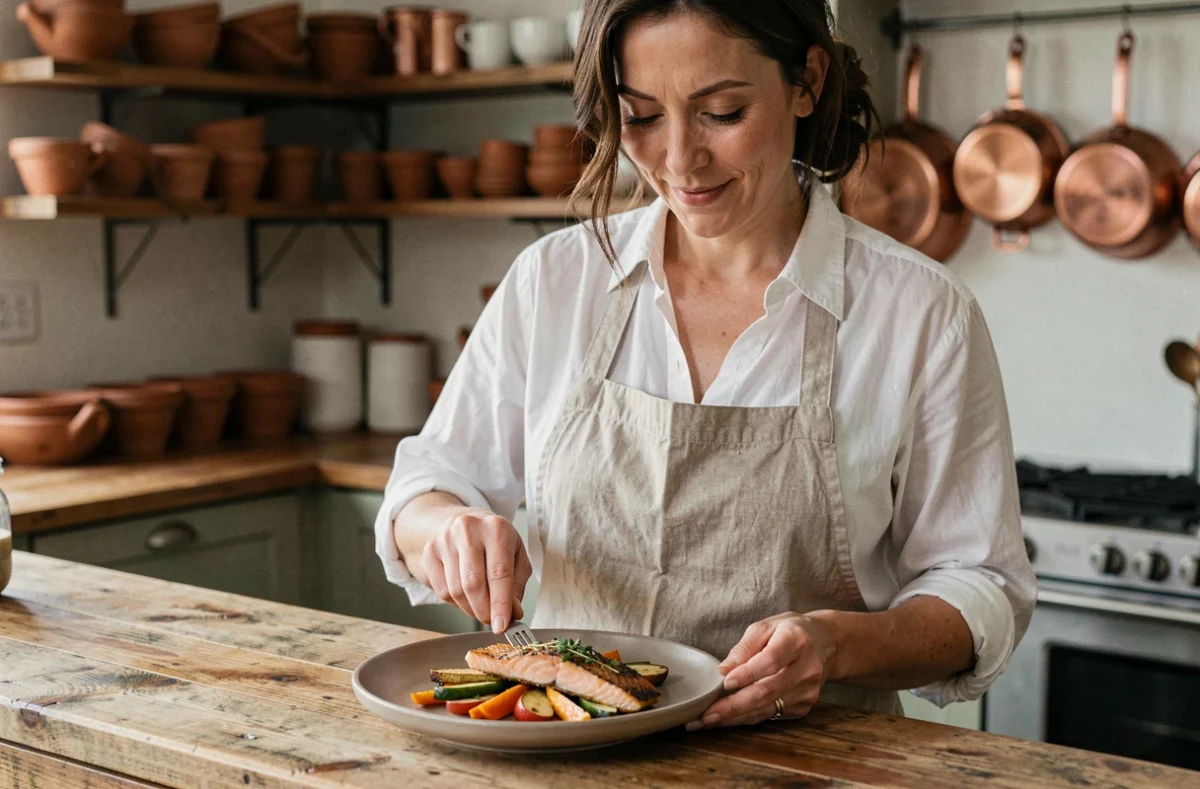
Awakening your taste buds with delicious and creative recipes requires understanding what truly brings pleasure to the palate. Three parameters come into play: the contrast of textures, the balance between dominant flavors and underlying flavors, and the quality of the base ingredients. Before multiplying recipes, it is worth measuring the impact of each of these levers on the final result.
Textures in creative cooking: what really changes the dish
Most content on gourmet recipes focuses on flavor combinations. Textures remain underutilized, even though they alter the taste perception more directly than an additional seasoning.
A vegetable gratin, for example, gains more appeal with a layer of toasted breadcrumbs than with standard grated cheese. Seasonal plant-based gastronomy takes this logic further: working with crunchiness, creaminess, and smokiness on vegetables allows for very indulgent dishes without animal protein.
The article published by Bobea in September 2026 on seasonal plant-based gastronomy details how cooking methods like confit or roasting transform simple ingredients (grains, legumes, squashes) into plates with a high density of pleasure. This approach relies on techniques accessible at home, not on professional equipment.
To delve deeper into this logic of contrasts in your meals, resources like papillesheureuses.fr offer recipes that precisely exploit these combinations of textures on a daily basis.
Gourmet recipes: comparison between classic and plant-based approaches
The trend of combining indulgence and plant-based ingredients deserves a concrete examination. Here is a comparison of three types of common dishes, contrasting the traditional version with a fully plant-based version worked on textures.
| Type of dish | Classic version | Creative plant-based version | Indulgence lever |
|---|---|---|---|
| Gratin | Potatoes, cream, Gruyère cheese | Sweet potato, cashew béchamel, smoked breadcrumbs | Creamy/crunchy contrast |
| Savory tart | Shortcrust pastry, bacon, crème fraîche | Olive oil pastry, confit leeks, toasted nuts | Slow cooking of vegetables (confit) |
| Autumn dessert | Apple pie, butter, sugar | Roasted apples, oat crumble, date caramel | Roasting + concentrated natural sugar |
In all three cases, the plant-based version compensates for the absence of animal fat with a cooking method that concentrates flavors. The confit leeks develop sweet notes absent in raw leeks. Roasting the apples intensifies their flavor through caramelization.
This table does not suggest that one approach is better than the other. It shows that culinary creativity relies less on adding ingredients than on choosing the cooking technique.
Flavors and seasoning: common mistakes in creative recipes
Creative cooking does not mean piling on spices. Three mistakes frequently recur in recipes shared online.
- Overdosing on strong spices: cumin, turmeric, or smoked paprika add depth in small doses, but mask the taste of the main ingredient when used excessively. Half a teaspoon is sufficient for a dish serving four people in most cases.
- Absence of an acidic component: a drizzle of lemon, a touch of apple cider vinegar, or a few homemade pickles refresh the taste perception with every bite. Many so-called gourmet recipes forget this acid-fat balance.
- Single seasoning at the end of cooking: salting and peppering only at the time of serving leaves flavors on the surface. Seasoning at each stage of cooking allows the herbs to penetrate the ingredient.
These three points do not require any additional ingredients. They pertain to method, not budget.
Labeling and origin of ingredients: a criterion that weighs on creativity
A rarely addressed angle in recipe blogs concerns the traceability of the products used. European regulations extend their origin labeling obligations to more categories of food. The development of digital labeling via QR codes now provides access to detailed information on nutrition, ingredients, and origin.
For amateur cooks, this evolution has a direct impact. Choosing flour with traceable origin, honey with clearly indicated country of production, or spices accompanied by a readable Nutri-Score alters the base quality of the dish.
Culinary creativity begins with selecting ingredients whose provenance is known. A dish made with poorly identified products remains a taste gamble, regardless of the technique used.
However, this traceability requirement does not only concern in-store purchases. Products sold online must also make mandatory information visible before purchase, making it easier for those ordering their ingredients online.
Autumn recipes: a playground for concentrated flavors
Why autumn favors creative cooking
Autumn products (squashes, mushrooms, nuts, apples, pears) share a common point: they withstand long cooking times that concentrate their natural sugars. This property makes them ideal ingredients for gourmet recipes without excessive fat addition.
A roasted butternut soup, for example, does not need cream to appear creamy. The prior roasting of the squash produces a silky texture solely through the cooking process.
Combining mushrooms and nuts for a complete dish
Mushrooms provide a natural umami flavor that effectively replaces meat stock. Sautéed over high heat with a drizzle of walnut oil and crushed walnut halves, they form a base for tart, risotto, or complete bowl.
Adding a fresh herb (thyme, rosemary) at the end of cooking preserves the volatile aromas that disappear during prolonged cooking. This technical detail makes the difference between a decent dish and a memorable one.
Creative and gourmet cooking does not rely on the complexity of recipes. It hinges on three decisions made even before turning on the heat: choosing traceable ingredients, mastering the appropriate cooking type for each product, and balancing textures rather than multiplying flavors. The rest is a matter of practice.